
Signs It's Time To Upgrade Your Switchboard
Most homeowners don't think much about their switchboard until something goes wrong. It sits in the garage, laundry, or meter box, doing its job quietly — until it doesn't. The switchboard is the central hub of a property's electrical system, distributing power to every circuit in the building and housing the protective devices that are supposed to cut power when something goes wrong. When it's outdated or no longer suited to the demands being placed on it, the consequences range from inconvenience to genuine safety risk. This guide covers the key signs that a switchboard upgrade may be needed, what the upgrade involves, and why it matters particularly for older properties in Grafton and the Northern Rivers.
Your Property Still Has a Ceramic Fuse Board
If your switchboard contains ceramic fuses rather than modern circuit breakers, it's almost certainly time for a replacement. Ceramic fuse boards were standard in Australian homes built before the 1980s and were the technology of their era — but they have significant limitations compared to modern switchboard components.
The core problem is that ceramic fuses require manual replacement when they blow. That means locating the right fuse wire, replacing it, and resetting the circuit — a process that takes time, requires knowing what you're doing, and in some cases results in fuses being replaced with wire of the incorrect rating, which removes the protection the fuse was there to provide in the first place.
Modern circuit breakers trip and reset with a switch. They respond faster, protect more reliably, and don't require replacement components. If your board still relies on ceramic fuses, it's also highly unlikely to have residual current devices (RCDs) or safety switches installed, which are now a standard requirement for new and upgraded electrical installations.
For more on why older properties need attention, read our
guide on electrical upgrades for older buildings.
Frequent Tripping or Blown Fuses
Circuit breakers trip — that's their job when a circuit is drawing more current than it should. An occasional trip after plugging in too many appliances at once is normal. Frequent tripping, or the same circuit repeatedly causing issues, is a different matter and points to an underlying problem that warrants investigation.
Frequent tripping is one of the clearest signs of an overloaded electrical circuit — and it often starts at the switchboard. In some cases the issue is a faulty appliance rather than the switchboard itself, but where tripping is persistent or widespread across multiple circuits, it often indicates that the board's capacity is no longer matched to the electrical demand of the property.
This mismatch tends to develop over time as properties accumulate more appliances, lighting, and technology than was anticipated when the switchboard was originally installed. A board that was adequate for a home in 1975 was not designed for the electrical load of a modern household, and the gap between original capacity and current demand is often significant.
Flickering or Dimming Lights
Lights that flicker or dim when other appliances are switched on are a sign that circuits are struggling to deliver consistent power. This can indicate loose wiring connections, a failing component within the switchboard, or circuits that are being asked to carry more load than they were designed for.
While flickering lights are sometimes traced to a specific appliance or a loose fitting rather than the switchboard, recurring or widespread flickering across the property warrants a proper inspection. Intermittent electrical faults that affect lighting can also indicate broader wiring issues that have their root at the switchboard, and these are the kinds of faults that shouldn't be left unexamined.
No Safety Switches or RCDs
Safety switches — technically called residual current devices (RCDs) — monitor the flow of electricity through a circuit and cut power within milliseconds if a fault is detected. They are a critical protective device and one of the most important safety features in a modern electrical installation.
Properties without RCDs installed lack this layer of protection. In Queensland and NSW, safety switch installation requirements have been progressively strengthened over the years, and while existing properties aren't always required to retrofit immediately, a switchboard that lacks RCDs is operating below the standard that modern electrical safety expectations demand.
An RCD installation can be carried out as part of a
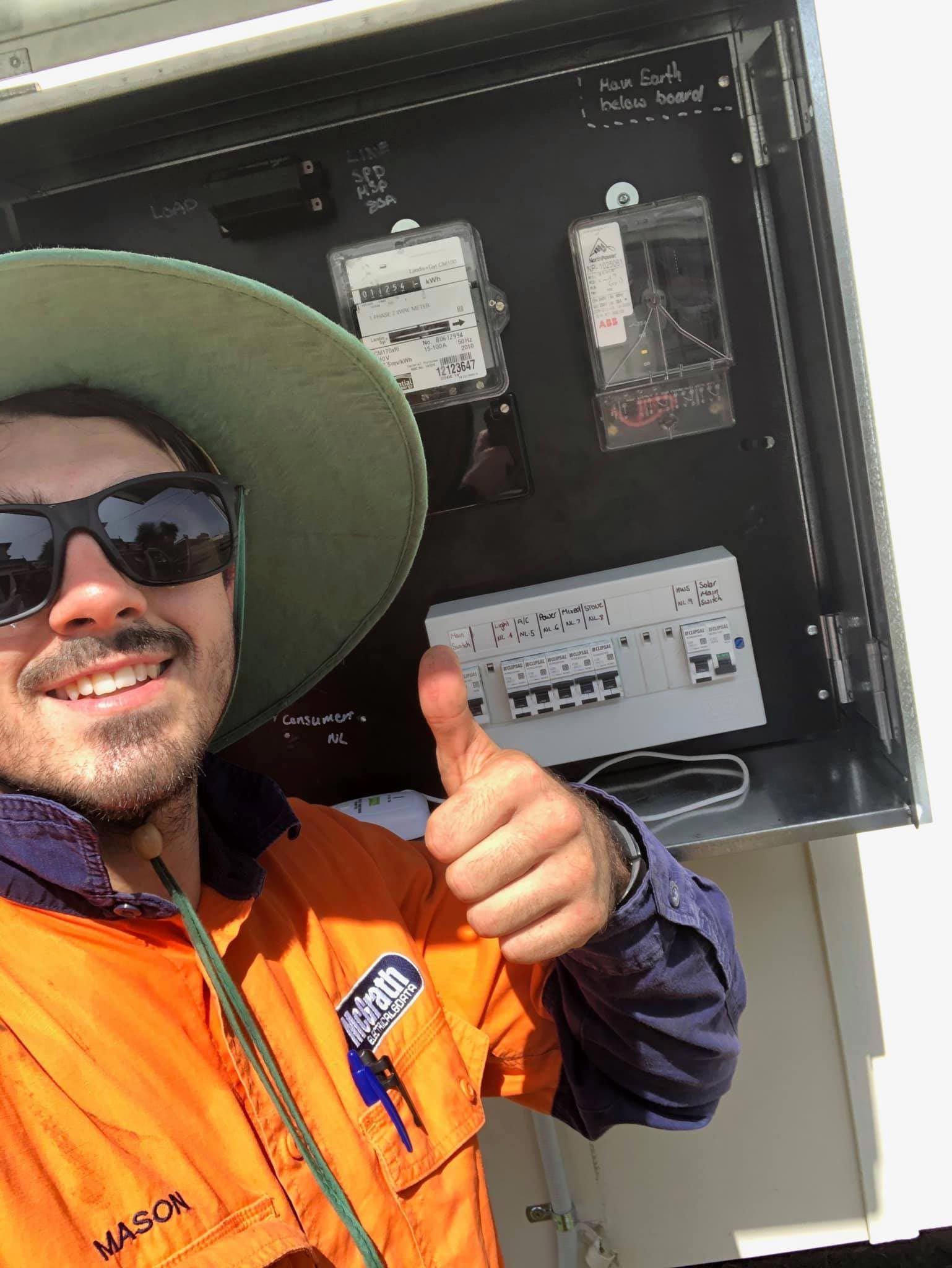
switchboard upgrade, and for any property where the board is being replaced or significantly modified, current standards require that safety switches be included. For older properties in the Northern Rivers where switchboards haven't been touched in decades, the absence of RCDs is often one of the most significant safety deficiencies on the property.
The Board Is Showing Physical Signs of Wear
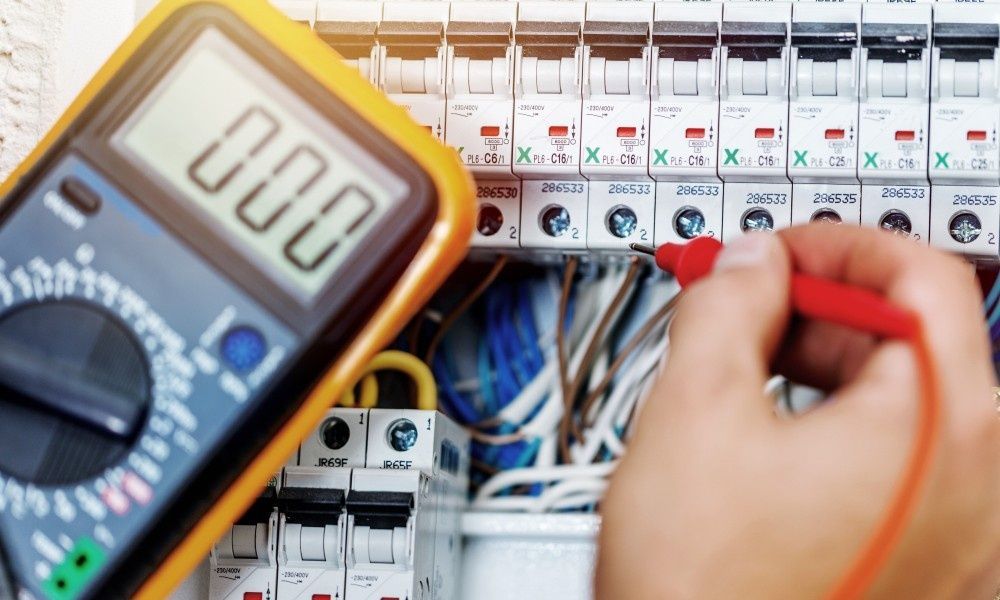
A switchboard that shows visible signs of deterioration — burn marks, scorch marks around terminals, corrosion, evidence of heat damage, or a burning smell near the meter box — is indicating that something is wrong and needs to be addressed without delay. These are not cosmetic issues; they're physical evidence of electrical fault activity that has already occurred or is ongoing.
Signs of heat damage around circuit breakers or wiring connections can indicate arcing, which is a situation where electricity is jumping across a gap rather than flowing through an intact conductor. Arcing generates significant heat, can ignite nearby materials, and is a known cause of electrical fires.
A switchboard that smells, shows burn marks, or has components that feel warm to the touch during normal operation should be inspected by a licensed electrician promptly. In some cases the issue is repairable; in others it confirms that switchboard replacement is the appropriate path.
Your Property Is Adding New Technology
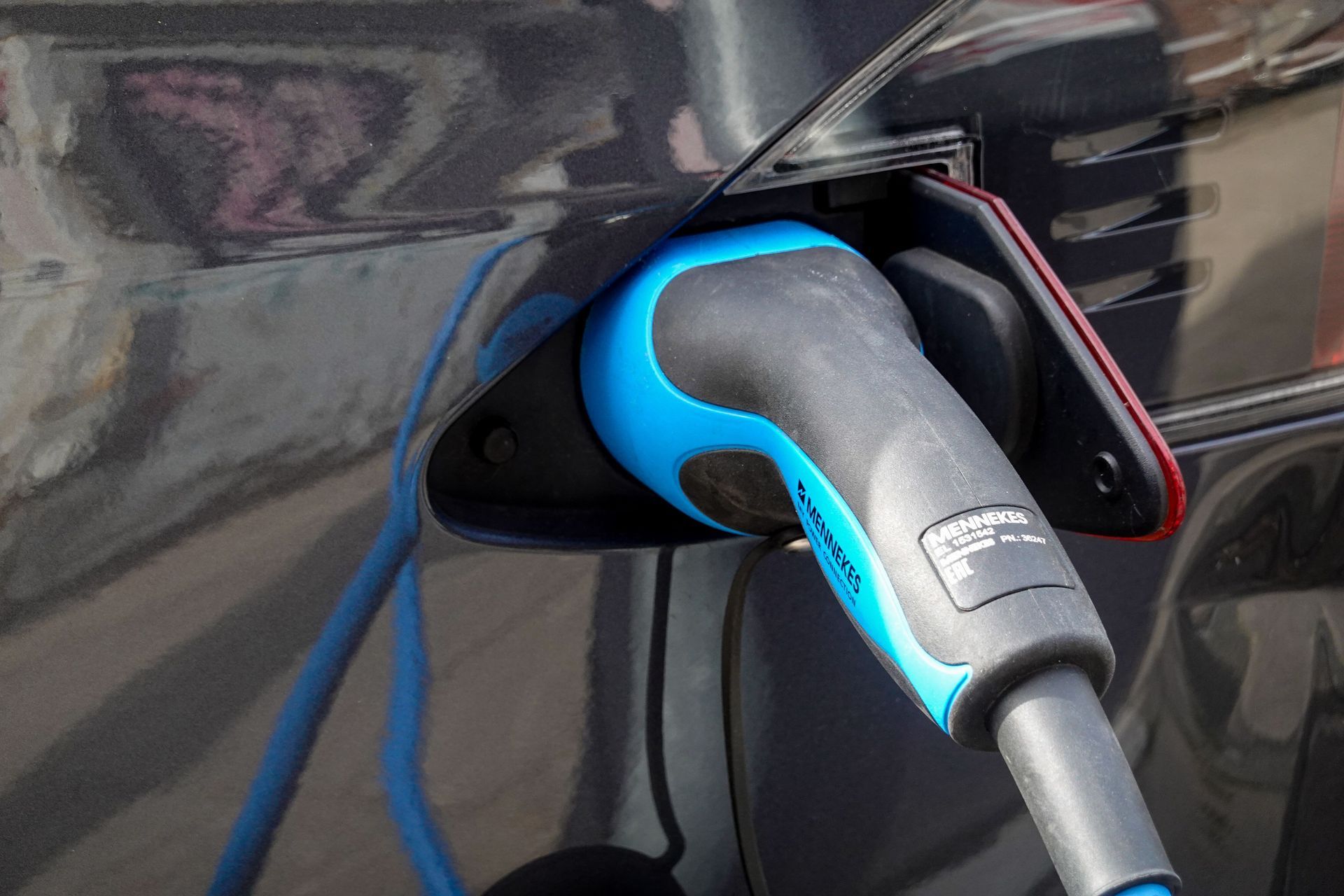
One of the clearest forward-looking reasons to consider a switchboard upgrade is the addition of technology that places new or sustained electrical demands on the system. Solar panel installations, battery storage systems, and electric vehicle chargers all require dedicated circuits with appropriate protection — and an older switchboard may not have the capacity, the correct circuit breaker types, or the physical space to accommodate them safely.
A switchboard upgrade in this context isn't just a safety measure — it's an enabling step that allows the property to make use of the technology being installed. An EV charger drawing significant current through a circuit designed for general household use, on a board without adequate protection, is a situation that creates risk rather than convenience.
For homeowners in Grafton and surrounding areas planning a solar installation or EV charger, having the switchboard assessed as part of the project planning is a practical step rather than an afterthought.
What a Switchboard Upgrade Involves
A switchboard upgrade replaces the existing board with a modern unit that includes circuit breakers sized appropriately for each circuit, RCDs on required circuits, and adequate capacity for the property's current and anticipated electrical demands. The work must be carried out by a licensed electrician — switchboard work is not a category of electrical work that can be undertaken by a homeowner or non-licensed trades person under Australian electrical safety legislation.
The process typically involves:
- Assessment of the existing board and wiring to identify what's present, what needs replacing, and what the upgraded board needs to accommodate
- Sizing the new board for current and anticipated load, including any planned additions like solar or EV charging
- Installation of the new board with correctly rated circuit breakers and RCDs as required
- Testing and certification of the completed installation, with an electrical safety certificate issued on completion
- Disconnection and reconnection of supply, which requires coordination with the network operator in some cases
The timeline for a residential switchboard upgrade is typically a single day for a straightforward replacement, though more complex properties or those with wiring that also needs attention may take longer.
Get in Touch
At McGrath Electrical & Data, we carry out switchboard upgrades in Grafton for both residential and commercial properties across the Northern Rivers. Whether you've noticed warning signs at your existing board, are planning a solar or EV charger installation, or simply have an older property that hasn't had its electrical system looked at in some time, our team is available to assess what's there and advise on the right path forward. A switchboard upgrade carried out by a licensed electrician is the kind of work that removes uncertainty and brings the property's electrical safety up to a current standard.
Get in touch to arrange an inspection or quote.